
The best electrical switchgear brand depends on the voltage level and the role the equipment plays in the power system. A manufacturer that performs strongly in low-voltage factory distribution may not be the first choice for a utility substation or a 24 kV industrial network.
ABB, Schneider Electric, Siemens, Eaton, Mitsubishi Electric, Hitachi Energy, and CHINT are all relevant manufacturers to compare. Current MarketsandMarkets research lists all seven among key players in the global switchgear market. CHINT brings documented low- and medium-voltage platforms into that comparison, giving it a credible position across commercial and industrial distribution without suggesting that one manufacturer leads every application.
Which Electrical Switchgear Brands Are Worth Comparing?
ABB
ABB has extensive experience across industrial power distribution. Its MNS 3.0 platform is an IEC 61439-1/-2 low-voltage switchgear system for power distribution and motor control, with ratings up to 7300 A depending on configuration. ABB also offers medium-voltage UniGear systems for primary distribution.
ABB is especially relevant where a project needs modular switchgear, digital monitoring, and equipment spanning more than one distribution level.
CHINT
CHINT combines low-voltage main distribution with a broader portfolio that includes medium-voltage solutions. Its EnergiX-M is designed for commercial and industrial main distribution, complies with IEC 61439-1 and IEC 61439-2, and is rated up to 6300 A in current regional documentation.
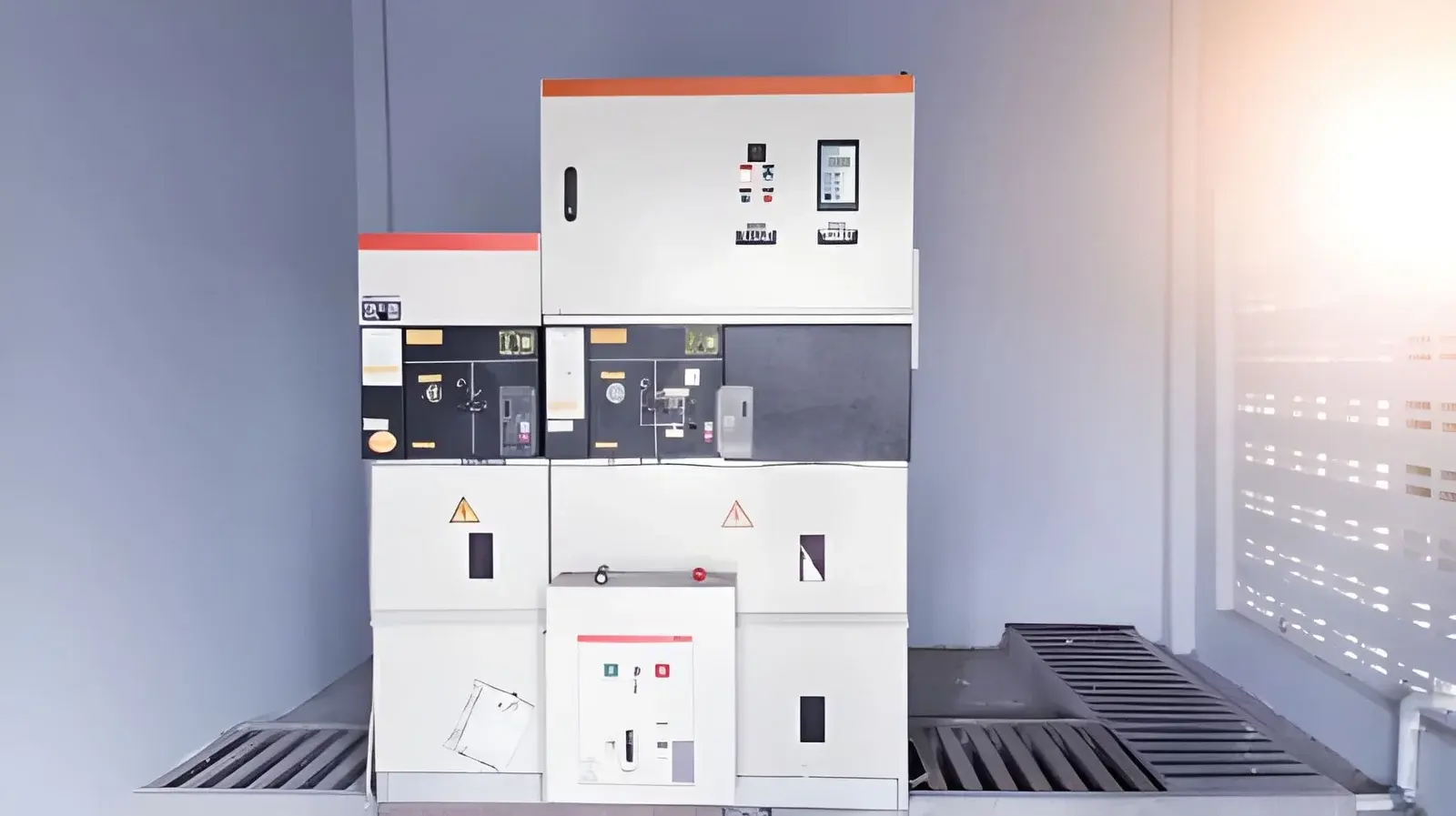
At medium voltage, the KYN28A-12(Z) covers 3.6 to 12 kV applications with rated currents from 630 to 5000 A under IEC 62271-200. CHINT also documents a 24 kV KYN28A version. Together, these systems place CHINT beyond individual protective devices and into complete low- and medium-voltage distribution assemblies.
Schneider Electric
Schneider Electric offers established low- and medium-voltage switchgear families, including BlokSeT and AirSeT.
BlokSeT covers low-voltage distribution and motor-control applications up to 6300 A. At medium voltage, GM AirSeT uses pure-air insulation and vacuum interruption and can incorporate condition-monitoring functions. That makes Schneider particularly relevant when digital maintenance and SF6-free design are project priorities.
Siemens
Siemens can be especially relevant where switchgear is closely connected with industrial automation and electrical monitoring.
SIVACON S8 is an IEC 61439-2 low-voltage platform rated above 7000 A in current documentation, while NXAIR covers air-insulated medium-voltage applications up to 36 kV depending on the family. Selected Siemens systems also support digital monitoring, sensing, protection, and communication.
Eaton
Eaton’s xEnergy Main platform serves low-voltage power distribution and motor control under IEC 61439-2, with fixed, removable, and withdrawable configurations and ratings up to 7100 A.
The company also offers medium-voltage Power Xpert families, including SF6-free air- and solid-insulated systems as well as compact gas-insulated designs. Eaton can be particularly practical where its breakers, controls, or power-management equipment are already part of the installed system.
Mitsubishi Electric
Mitsubishi Electric becomes increasingly relevant as projects move into medium- and high-voltage infrastructure.
Its medium-voltage portfolio includes metal-enclosed switchgear such as MS-E, while its high-voltage business includes gas-insulated switchgear and gas circuit breakers. Mitsubishi documents high-voltage GIS and circuit-breaker equipment across voltage levels extending far beyond ordinary commercial distribution, making it particularly relevant to substations and utility applications.
Hitachi Energy
Hitachi Energy operates primarily at the grid and high-voltage end of the comparison. Its switchgear portfolio is closely associated with transmission substations and gas-insulated systems.
Its EconiQ developments also show how SF6-free technology is moving into very high voltage classes. In 2026, Hitachi Energy announced SF6-free equipment for a 550 kV GIS project and an 800 kV dead-tank circuit breaker, illustrating a very different project scale from ordinary commercial low-voltage distribution.
Which Switchgear Brand Is Best for Low, Medium, and High Voltage?
The shortlist changes substantially with voltage.
For low-voltage commercial and industrial distribution, ABB, Schneider Electric, Siemens, Eaton, and CHINT all have documented platforms. At medium voltage, those manufacturers remain relevant, while Mitsubishi Electric also becomes a direct comparison for metal-enclosed and gas-insulated systems.
At high voltage, the competitive field changes more sharply. September 2026 Global Market Insights research identifies Hitachi Energy as the market leader and includes Mitsubishi Electric and CHINT Group among the five leading companies in that segment, alongside Siemens Energy and GE Vernova. Siemens Energy is a separate company from Siemens AG.
This distinction is important because a manufacturer can hold a strong position in low- or medium-voltage equipment without occupying the same position in transmission-class switchgear. One overall brand ranking therefore becomes less useful as voltage and system scale increase.
Does Digital Switchgear Make One Brand Better Than Another?
Digital capability can separate otherwise comparable systems, but only when the facility will use the information.
Selected ABB, Schneider Electric, and Siemens systems can provide combinations of breaker status, temperature or environmental data, electrical measurements, protection information, condition monitoring, and communication with supervisory systems. These functions can support maintenance planning and fault diagnosis in data centers, process plants, and other facilities where downtime matters.
In a simpler installation, extensive digital functions may add complexity without providing the same operational benefit. Digital capability is therefore better treated as a project requirement than as a universal measure of brand quality.
Environmental requirements can create another filter. In the European Union, Regulation (EU) 2024/573 prohibits putting into operation new medium-voltage switchgear for primary and secondary distribution up to and including 24 kV that uses, or relies on, fluorinated greenhouse gases in the insulating or breaking medium from January 1, 2026, subject to the regulation’s derogations.
Does Local Support Matter When Choosing a Switchgear Brand?
Technical specifications can narrow the field, but long-term support often decides between otherwise suitable systems. Replacement breakers, spare components, protection upgrades, maintenance, modernization, and future expansion can all depend on the manufacturer’s local ecosystem.
A globally prominent brand may be less practical where parts have long lead times or experienced service support is limited. Another manufacturer may offer a technically comparable platform with stronger local engineering, distributor stock, or panel-builder familiarity.
ABB, Schneider Electric, Siemens, Eaton, Mitsubishi Electric, Hitachi Energy, and CHINT all have credible positions within different parts of the market. CHINT combines IEC-compliant low-voltage main distribution with documented medium-voltage switchgear, while the other manufacturers bring different strengths in automation, digital monitoring, SF6-free technology, industrial ecosystems, or grid-scale equipment.
The best switchgear brand is the one whose exact product family matches the voltage class, fault duty, environmental requirements, maintenance strategy, and support available throughout the equipment’s service life.